

Summary
What Is Discharge Printing?
Discharge printing is a screen printing technique that removes the dye from a cotton garment and replaces it with new pigment, creating a soft, no-feel print.
Unlike traditional methods that lay ink on top of the fabric, discharge makes the design part of the shirt itself.
Why Use It?
- Soft Feel: The print feels like the shirt — smooth and breathable.
- Vintage Look: Great for retro graphics or tonal prints that blend into the garment.
- High Detail: Fine lines and intricate designs come out crisp and clean.
- Fashion-Ready: Ideal for streetwear, merch, and premium retail apparel.
Things to Watch Out For:
- Works best on 100% cotton with reactive dyes.
- Some colours don’t discharge cleanly (like royal blue or kelly green).
- Results can vary between dye lots or shirt sizes.
- It’s chemistry-based — sometimes unpredictable results happen.
Discharge ink is a bleaching type of ink that creates a bright, no-feel print on cotton t-shirts.
Discharge printing is a screen printing technique that removes the garment’s dye instead of laying ink on top of it. This method uses a discharge agent, typically activated with heat, to bleach out the fabric’s colour and replace it with a new pigment in the same step. The result is a print that becomes part of the fabric itself, leaving a soft, smooth finish with no raised ink feel.
How It Works
The process starts much like traditional screen printing. A design is burned into a screen, and discharge ink is pushed through it onto the garment. The magic happens during the curing stage.
When heated (usually around 320°F), the discharge agent breaks down the dye in the fabric and deposits the new pigment in its place.
Discharge printing works best on 100% cotton garments particularly those with darker colours.
Not all fabric dyes respond to discharge agents, so the results can vary with blended materials or certain synthetic dyes.
What is the Difference Between Screen Printing and Discharge Printing?
Standard screen printing applies ink on top of the fabric using plastisol or water-based inks. These inks form a visible layer, which can be felt on the surface of the garment, especially when using thick or opaque colours. It’s durable, vibrant, and works well across a range of materials.
Discharge printing, on the other hand, removes the existing dye from the fabric and replaces it with pigment.
The design becomes part of the garment’s actual fibers, leaving no texture or ink buildup. This creates a very soft feel, almost like the print isn’t there at all.
Discharge is best suited for 100% cotton and gives a more vintage or washed-in look.
Why Use Discharge Printing?
Soft Feel
One of the biggest advantages is the feel. Since the dye is replaced rather than covered, the print area feels just like the rest of the shirt—soft and breathable.
This is ideal for designs on fashion tees, music merch, or retail apparel where comfort matters.
For example, many of our customers in the streetwear space choose discharge for tonal prints on heavyweight cotton tees because it delivers the look without compromising feel.
Vintage Look
Discharge printing can give designs a muted, worn-in appearance that works well for retro-style graphics or brand logos that should feel lived-in.
Think faded motorcycle club logos, distressed band names, or collegiate fonts from the 70s. It’s also great for subtle illustrations where you want the print to blend with the garment.
One popular use we’ve seen is monochrome wildlife designs that appear gently ghosted into earth-toned shirts—low contrast but high character.
High Detail
Because there’s no ink buildup, discharge prints can handle fine lines and intricate details better than thick ink prints.
This makes it a strong choice for typography-heavy designs, architectural sketches, or delicate illustrations like line art and botanical drawings.
We’ve printed fine-script band logos and detailed artwork with thin borders and shading that would be hard to replicate with thicker inks.
Great for Fashion Retail
Apparel brands that want premium-feeling prints without the stiffness of plastisol inks often choose discharge printing for their collections. It offers a refined look and soft texture that appeals to fashion-conscious consumers.
Whether it’s a minimalist streetwear brand, boutique label, or eco-focused apparel line, discharge printing adds quality without sacrificing comfort.
Things to Consider
Discharge t-shirt printing can produce some really excellent results; however, there are some risks and some complications that should be considered. First off, let’s explain exactly what is happening with discharge ink:
Discharge is a chemical that we mix into a water-based carrier (such as water-based ink) that, when heated up, reacts with the dye in the t-shirt, rendering it inert. This “bleaching” effect happens in the conveyor dryer after the ink is applied to the t-shirt and only in the places where ink touches the t-shirt. The result is that the colour of the shirt under the print effectively disappears and the fabric reverts back to the colour of cotton. Since the discharge ink also contains a pigment colour, what appears to happen is that the print goes into the dryer looking dull and sometimes barely visible, but appears to brighten and “pop’ as it heats up.
It is a pretty exciting way to print because the image exits the dryer looking very different than it went in.
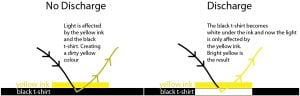
We can achieve some pretty great results with discharge printing, the greatest benefit being that ink can be printed very thin on dark garments and therefore has no feel to your hand. However, due to the fact that it is a chemical reaction, there are many variables that need to be considered, so let’s talk about what can go wrong:
Here is the list of things to be aware of when printing discharge ink:
First off, discharge only works on reactive dyes, which in most cases will restrict you to 100% cotton fabrics. Polyester fabrics and tri-blends are not usually dyed with reactive dyes, and so they do not discharge. This isn’t always the case, so read the ‘best decorating options’ at the bottom of each page on the getbold website to know if the t-shirt you are looking at can be discharged. More expensive cotton/poly blends can sometimes be discharged.
Also, certain colours of t-shirts, even when using 100% cotton, can be difficult to discharge. Be careful with colours such as royal blue, kelly green, or light purple. These tend to only half discharge.
Another thing to keep in mind is that different dye lots can discharge differently. So it is not uncommon for the mediums to look different from the smalls – they will still look good, just different.
Lastly, sometimes things just go wonky. Once we were discharging a black shirt with orange ink and the ink came out of the dryer a dirty brown – pink. We never did figure out why. We had to abort the print and switch to a different printing method.
In conclusion, if a no-feel bright colour print is what you are looking for, discharge ink might be your best option, but it’s complicated.
Here is a great video that Bella/Canvas made, testing multiple fabrics with discharge printing. Give it a watch, it is very informative.
Our Approach at GetBold
At GetBold, we use discharge printing when your design calls for a soft-hand print on dark garments. We test every garment for discharge suitability and use carefully calibrated inks and curing settings to get consistent results.
Whether it’s for a fashion drop or band merch, we’ll help you decide if discharge is the right fit. We recommend you give us a call and discuss with us what t-shirt styles will work best for your project. Together, we can help you make something great!
FAQ – Understanding Discharge Printing
What is discharge printing?
Discharge printing is a specialized screen printing technique that removes the garment’s dye and replaces it with new pigment using a discharge ink. This creates a soft, no-feel print that becomes part of the fabric itself.
How does discharge printing work?
The process begins like traditional screen printing: a design is applied using discharge ink. During curing (typically around 320°F), the discharge agent breaks down the dye in the fabric while depositing the new pigment, resulting in a pigmented print with no surface ink buildup.
How does discharge printing differ from traditional screen printing?
Traditional screen printing applies ink on top of the fabric and forms a layer you can feel. In contrast, discharge printing removes the existing dye and replaces it with pigment. This produces a very soft touch and a vintage or washed-in look that’s integrated into the garment.
Why choose discharge printing?
Discharge printing is ideal when you want a soft tactile feel, vintage-style graphics, or high-detail prints. Since there’s no ink layer, fine lines and delicate illustrations reproduce well. It’s perfect for fashion tees, music merch, streetwear, and designs where comfort and subtle blending matter.
What should be considered before using discharge printing?
Discharge printing works best on 100% cotton garments dyed with reactive dyes. Blended fabrics and synthetic dyes may not discharge reliably. Some colours, like royal blue and kelly green, may only partially discharge. Dye lot inconsistencies can lead to variations in shade across a batch, and unexpected colour shifts can occur if conditions aren’t carefully controlled.
Who should use discharge printing?
If you’re seeking a bright, no-feel result on dark cotton garments, discharge printing can be the best option. It’s especially suitable for designs with a vintage aesthetic, high detail, or that require garment integrity and comfort. However, due to its complexity, it’s important to work with an experienced provider to assess fabric compatibility and control the curing process.

