Return to Screen Printing
Screen Printing on Apparel Vancouver and Canada Wide
Screen printing is the best choice for bold, high-impact designs—especially at larger quantities.
Our standard screen printing uses plastisol ink to create bold, durable designs with strong, vibrant colour and a smooth finish.
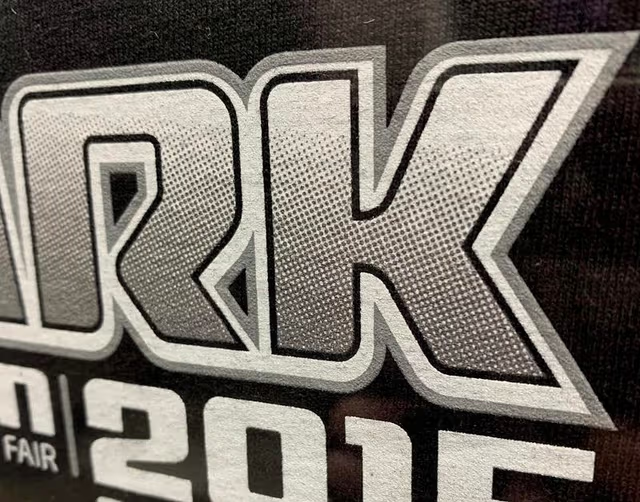
It works best on garments like t-shirts, hoodies, and sweatshirts, producing prints that hold up through repeated wear and washing. From simple one-colour logos to more detailed designs using techniques like halftones, standard plastisol screen printing is a reliable and versatile option.

When should I use Screen Printing?
Best for:
- Band merch / events / branding
- Bold graphics
- Detailed artwork
- Bright colours on dark garments
- Large front or back designs
- Large print runs
Not ideal for:
- Photographic images
- Hats
- Garments with zippers or uneven surfaces
- Delicate fabrics such as nylon or spandex
- Short runs

What can be Screen Printed
Screen printing works best on flat stable garments like cotton t-shirts, sweatshirts, and hoodies—anything that can lay flat during the printing process.
Most of the graphic tees people wear every day are screen printed. It’s the go-to method for bold, large designs on apparel.
Where Screen Printing Has Limitations
Non-flat surfaces
Garments need to lay flat on the press. Features like zippers, seams, or thick pockets can interfere with printing and even damage screens.
Garments need to lay flat on the press. Features like zippers, seams, or thick pockets can interfere with printing and even damage screens.
Heat-sensitive fabrics
Screen printing requires high heat to cure the ink. Some synthetic fabrics—like certain polyester or nylon blends—can shrink, warp, or even melt during this process.
Screen printing requires high heat to cure the ink. Some synthetic fabrics—like certain polyester or nylon blends—can shrink, warp, or even melt during this process.
Pro tip:
Our catalogue is curated with garments we know will print well, so you can choose with confidence.
Our catalogue is curated with garments we know will print well, so you can choose with confidence.

Screen Printing vs DTF Transfer
Choose Screen Printing if you want:
✔ Large quantities (best value as volume increases)
✔ Bold, high-impact designs
✔ Specialty inks like metalics or puff or florecent
✔ Long-lasting prints that won’t peel
✔ Clean, vibrant colours with strong opacity
✔ A more traditional, premium print finish
✔ Bold, high-impact designs
✔ Specialty inks like metalics or puff or florecent
✔ Long-lasting prints that won’t peel
✔ Clean, vibrant colours with strong opacity
✔ A more traditional, premium print finish
Choose DTF Transfers if you want:
✔ Smaller runs (great for under ~24 pieces)
✔ Full-colour designs with lots of detail
✔ Photographic images and complex artwork
✔ Gradients, fades, and unlimited colours
✔ To print on delecate fabrics or close to zippers and pockets.
✔ Full-colour designs with lots of detail
✔ Photographic images and complex artwork
✔ Gradients, fades, and unlimited colours
✔ To print on delecate fabrics or close to zippers and pockets.
Key Differences
- Screen Printing = best for larger orders and bold, simple designs
- DTF Transfers = best for small runs and complex, full-colour artwork
Good to Know
- Screen printing inks sit on and slithgly into the fabric and soften with wear
- DTF prints sit on top of the fabric and can feel less a part of the garment.

Screen printing vs Embroidery
Choose Screen Printing if you want:
✔ Large, bold designs
✔ Detailed artwork, fine lines, or gradients
✔ Prints that stay lightweight—even at larger sizes
✔ Bright, vibrant colours that stand out
✔ A cost-effective option for larger quantities
✔ Detailed artwork, fine lines, or gradients
✔ Prints that stay lightweight—even at larger sizes
✔ Bright, vibrant colours that stand out
✔ A cost-effective option for larger quantities
Choose Embroidery if you want:
✔ A premium, textured look
✔ Clean, professional branding (polos, hats, uniforms)
✔ Smaller placements like left chest logos
✔ Long-lasting decoration that won’t fade or crack
✔ A classic, high-end appearance
✔ Clean, professional branding (polos, hats, uniforms)
✔ Smaller placements like left chest logos
✔ Long-lasting decoration that won’t fade or crack
✔ A classic, high-end appearance
Key Difference
- Screen Printing = bold, graphic designs that can cover larger areas
- Embroidery = clean, stitched logos with a more refined, dimensional feel
Good to Know
- Screen printing sits on (and slightly into) the fabric and stays lightweight
- Embroidery uses thread stitched through the garment, adding texture and structure

Screen Printing vs DTF Transfer vs Embroidery
Let's compare all three.
This image should give you a clear understanding of how the three image styles differ.
In reality, we would discourage you from a screen print this close to the buttons—but it’s a great visual to show the difference in how each method looks.
You can quote both DTF, screen printing and embroidery on our website.
We let you choose which print process you want for your project.
Most shops decide for you based on what's easiest for them. It's all called printing and don't specify the process. We know that the results can be very different, so you should get to choose - after all, it's your project.
Click Instant quote, in the drop down select screen print, or transfer print. Quote both and choose the one that is best for you.

Design Guidelines
Designing for screen printing can make a big difference in both cost and final quality. Keeping your artwork print-friendly will ensure the best possible result.
Keep colours simple
Each colour in your design requires its own screen. Fewer colours help keep costs down and make production more efficient.
Each colour in your design requires its own screen. Fewer colours help keep costs down and make production more efficient.
Use solid shapes and bold lines
Screen printing works best with clean, defined artwork. Strong lines and solid fills produce the sharpest, most consistent prints.
Screen printing works best with clean, defined artwork. Strong lines and solid fills produce the sharpest, most consistent prints.
Plan for larger print areas
Screen printing excels with larger designs. Full front or back prints are where this method really stands out.
Screen printing excels with larger designs. Full front or back prints are where this method really stands out.
Expect large dots for you halftone gradients
Gradients and shading can be achieved using halftone dots. This allows you to simulate additional tones without adding more colours. Screen printing looks best with large halftone dots. Typically around 35 dpi. (We can do the halftones for you, we don't require you to pre-halftone your design.)
Gradients and shading can be achieved using halftone dots. This allows you to simulate additional tones without adding more colours. Screen printing looks best with large halftone dots. Typically around 35 dpi. (We can do the halftones for you, we don't require you to pre-halftone your design.)
Avoid overly small details
Very fine lines and tiny text can be difficult to reproduce cleanly, especially on fabric. Simplifying small elements will improve the final result.
Very fine lines and tiny text can be difficult to reproduce cleanly, especially on fabric. Simplifying small elements will improve the final result.
Match your design to the garment
Fabric type and colour can affect how your print looks. Dark garments may require an underbase, while certain materials can influence ink feel and finish.
Fabric type and colour can affect how your print looks. Dark garments may require an underbase, while certain materials can influence ink feel and finish.
Use the shirt colour in the design
If dark green is a big part of your design, put it on a dark green shirt and use the shirt colour as part of the image. It saves you money and it makes the shirt more wearable and lightweight. Plus, it's just good design!
Technical Specificatons:
For the best screen printing results, vector artwork is preferred. Programs like Adobe Illustrator create scalable, clean designs with sharp edges that translate perfectly to screens.
If you’re designing in a pixel-based program like Photoshop, be sure your file is set up at 300 DPI at the final print size. This ensures your artwork prints clearly and maintains detail.
If your artwork isn’t quite at print quality, don’t worry—we’ll review it and let you know. In most cases, we can help adjust or rebuild the file to get it ready for production.

Pantone Matching
We use the Pantone Solid Coated system for precise ink mixing. If you provide a Pantone colour from this book, we can match it accurately.
For online references (RGB, HEX, or screen colours), we will match as closely as possible—but keep in mind that colours on screens are not always accurate.
For best results, we recommend working from a Pantone book that is less than one year old, as colours can shift over time.
If you need help selecting a specific colour and don’t have a Pantone code, we recommend booking an appointment in our showroom to choose directly from our colour books.

Pricing Factors
Screen printing pricing is mainly based on the number of colours in your design and the quantity you order. The price is not affected by the size of the print.
Number of colours
Each colour requires its own screen and setup. More colours mean more prepress time, which increases cost. Keeping your design to fewer colours is the most effective way to save.
Each colour requires its own screen and setup. More colours mean more prepress time, which increases cost. Keeping your design to fewer colours is the most effective way to save.
Quantity
The more pieces you order, the lower your cost per item. Setup time is spread across all garments, making larger runs much more cost-effective.
The more pieces you order, the lower your cost per item. Setup time is spread across all garments, making larger runs much more cost-effective.
Once production starts, screen printing is extremely efficient—the press can run at high speed, producing large quantities quickly. This is why screen printing is best suited for bigger orders.
Garment choice
The style and type of garment you choose will affect the overall price of your project.
The style and type of garment you choose will affect the overall price of your project.
Mix and match for better pricing
You can combine different garments—like t-shirts and sweatshirts—as long as they use the same design. This helps increase your total quantity and lower your per-piece cost.
You can combine different garments—like t-shirts and sweatshirts—as long as they use the same design. This helps increase your total quantity and lower your per-piece cost.

Why Choose GetBold for Screen Printing
GetBold has been screen printing since 1999. It all started in Matt’s garage with a manual press and a lot of grit. Since then, we’ve spent decades refining the craft—investing in top-tier equipment, developing our own techniques, and learning what works (and what doesn’t) through real production experience.
And Matt is still here today, applying that knowledge to every project.
Every order is reviewed by an experienced member of our team to ensure your design is set up properly for screen printing—not just on screen, but on fabric.
We provide clear digital proofs so you can confidently approve your artwork before production begins.
All printing is done in-house, giving us full control over quality, consistency, and turnaround times.
Most importantly, we stand behind our work—something reflected in our consistent five-star rating on Google.
Screen printing is where we started, and it's what we do best.
Best Products for Screen Printing
Screen printing is a great choice for bold, high-impact designs on:
We Made Them