Summary
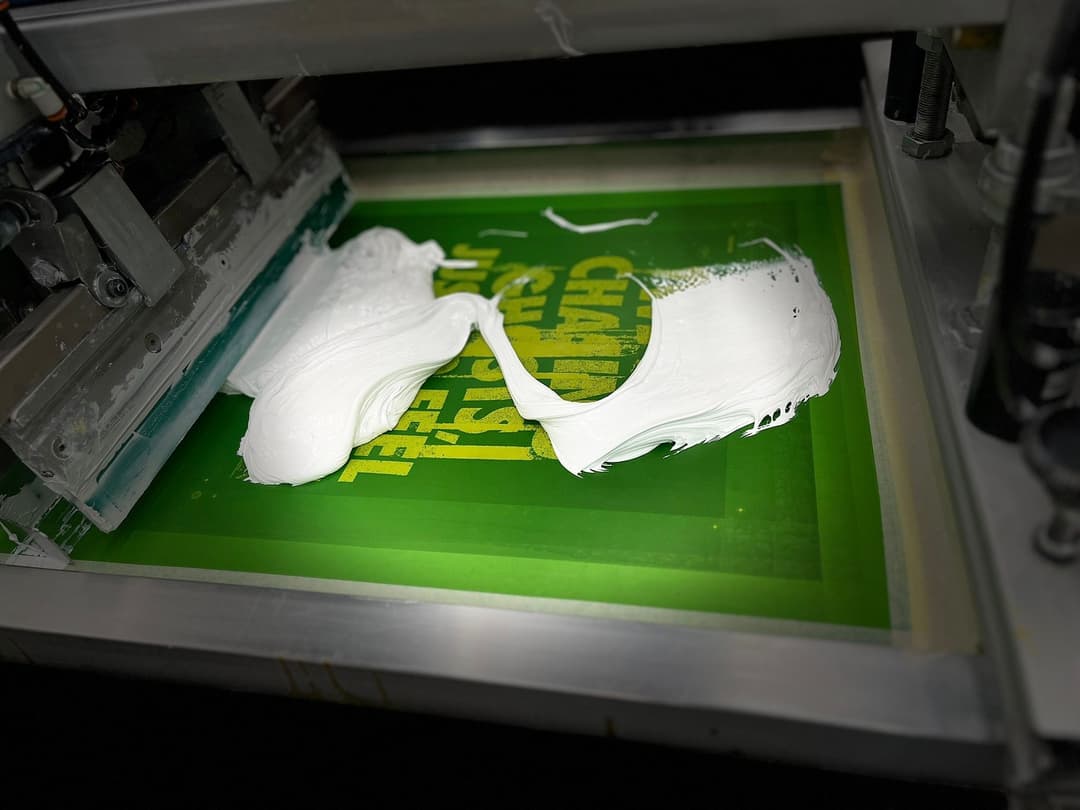
If you’re considering screen printing for your apparel, here’s what you need to know. Screen printing pushes ink through a stencil onto fabric, producing vibrant, long-lasting designs. It’s ideal for team orders, merchandise, or uniforms when quality and durability matter.
Advantages include:
- Bright colours that pop, especially on dark fabrics
- Durability that holds up through repeated washing
- Cost savings on bulk orders
- Creative effects like puff, glitter, or metallic inks
- Versatility across fabrics and surfaces
- Consistent vibrancy over time
- Easy reorders once screens are created
Drawbacks to consider:
- Not cost-effective for small runs
- Price increases with more colours
- Less suited for ultra-fine detail
- Longer setup and turnaround
- Some environmental impact from screens and cleaning

Screen printing is one of the oldest and most reliable methods for decorating apparel.
It involves pushing ink through a stencil (or screen) onto fabric. This process allows for vibrant, durable prints that stand the test of time.
At GetBold, we’ve used it for everything from simple logos to detailed graphics on T-shirts, hoodies, and bags.
Whether you’re organizing a big team order or launching your own merch line, screen printing offers a dependable way to make your designs look sharp and last long.
Advantages of Custom Screen Printing
Bright, Bold Colours
Screen printing inks sit on top of the fabric, not inside it. That means the colours stay vibrant and stand out, especially on darker garments. We often recommend plastisol ink for that reason. I
t delivers solid, crisp results. Compared to methods like DTG or sublimation, which soak ink into the fabric, screen printing allows for more opacity and saturation.
This is especially useful when printing on black or coloured garments where other methods may look muted or washed out. The result is a richer and more consistent colour across your entire batch.
Great Durability
A well-cured screen print can hold up to a lot of wear and tear. It won’t fade or crack easily, even after dozens of washes. That’s why screen printing is a favourite for workwear and team uniforms. The durability comes from the thickness of the ink layer and the curing process.
Once printed, the garment goes through a high-temperature dryer (around 320°F), which bonds the ink permanently to the surface of the fabric.
This makes the print resistant to washing, friction, and even environmental exposure like sun and moisture.
Cost-Effective for Larger Orders
Once the screens are made, printing more shirts doesn’t add much to the cost. That makes screen printing a great choice when you’re ordering in volume. It’s a smart solution for school spirit wear, event merchandise, or staff uniforms.
For example, a high school ordering 200 grad hoodies with a simple two-colour logo can bring the unit price down significantly.
Similarly, a summer camp outfitting all its counsellors and campers with matching tees can take advantage of the price breaks that come with quantity.
Specialty Inks and Techniques
You can get creative with glitter, puff ink, glow-in-the-dark, foil, and other effects. These inks make for eye-catching designs that aren’t possible with some other methods.
A band might want a metallic gold print on their tour merch, while a dance team could go for puff ink to add a 3D effect to their logo.
Specialty techniques like these can help your design stand out and add visual interest to any garment.
Works on Many Surfaces
Screen printing isn’t just for cotton tees. We print on sweatshirts, bags, even athletic gear. It’s a versatile method that adapts to many garment types.
Some printing methods like DTG work best only on 100% cotton, but screen printing can be applied to cotton, blends, polyester, canvas, and performance fabrics.
This makes it especially useful for printing on uniforms, tote bags, jerseys, or moisture-wicking shirts where other methods might fail to bond well or wash out prematurely.
Long-Lasting Ink Vibrancy
Screen printing uses thicker layers of ink that stay vivid wash after wash. The colours don’t fade quickly and keep looking great for years.
Because the ink sits on the surface and is cured at a high temperature, it forms a durable layer that resists fading from detergents, abrasion, and UV light.
This is especially noticeable in dark inks printed on light garments, where other methods might start to dull over time.
Ideal for Repeat Orders
Once your screens are created, we can reuse them for future batches. That makes repeat orders quick, easy, and less expensive.
This is perfect for organizations that need consistent branding over time, like landscaping companies refreshing their uniforms annually, gyms ordering new member apparel each season, or event organizers printing shirts for recurring festivals or races.
Disadvantages of Custom Screen Printing
- Not Ideal for Small Orders
Each colour in a design needs its own screen. That setup takes time and materials, which makes it less cost-effective if you’re only printing a few items. - Price Increases with Colour Count
The more colours in your artwork, the more screens you’ll need. That means higher setup costs and longer production time. - Limited Fine Detail
Screen printing does well with bold lines and solid areas, but tiny text or detailed images may lose sharpness. On thick garments like hoodies, those small details can get squished. - Slower Turnaround
Because of the setup involved, screen printing can take a little longer, especially for complex, multi-colour jobs. - Environmental Factors
Screen cleaning requires water and chemicals. We use eco-friendly practices where possible, but screen printing does create more waste than some digital methods.
How We Do It at GetBold
Quality, excellence and expertise are what you can expect with GetBold’s custom screen-printing products. New company shirts, team swag or school mementos, GetBold’s screen-printing gurus can bring your ideas to life.
We supply a wide range of quality garments, which come in different styles and colours, and have been tested to withstand physical pressures that come from wear and tear.
High-quality materials, such as the type of fabric and type of ink, are all crucial to ensuring your custom screen-printed garments meet your expectations.
We prepare each job carefully by making sure the right inks, correct density and curing temperatures are selected to turn the product you imagined into a printed reality.
The options are extensive when it comes to your custom screen-printing needs.
GetBold offers a variety of screen-printing techniques, such as plastisol inks for bright colours and muted tones, and discharge water-based inks that absorb directly into the material for a natural feel.
Additionally, we have specialty screen-printing options, such as glitter, shimmer or metallic inks; puff inks for designs that raise above the garment and give it texture; foil inks for a shiny or reflective appearance; or a combination of the above!
Is Screen Printing Right for Your Project?
If you’re printing more than a dozen items and your design isn’t overly detailed or colour-heavy, screen printing is a solid bet. It’s tough, bright, and gives you a lot of creative options.
But if you’re looking for a small run or a super-detailed image, one of our other services might be a better fit.
Curious about what screen printing could look like for your project? Check out our screen printing page for more info and instant quotes.
FAQ – The Advantages and Disadvantages of Screen Printing
What is screen printing?
Screen printing is a traditional method that pushes ink through a stencil (screen) onto fabric, producing vibrant, durable designs that wear well over time.
What are the advantages of screen printing?
Screen printing offers several benefits. The colours are bright and bold because the ink sits on top of the fabric rather than soaking in. It is highly durable, resisting fading and cracking even after many washes. The method is cost-effective for large orders since producing more items after the screens are made adds very little extra cost. It also allows for specialty inks and effects like glitter, puff, and metallic finishes. Screen printing works on a wide variety of surfaces including cotton, polyester, canvas, and athletic gear. The ink vibrancy remains strong over time, and once screens are made, repeat orders are easy and more affordable.
What are the disadvantages of screen printing?
Screen printing is not ideal for small orders because each colour requires its own screen, which adds to setup time and cost. The price increases with the number of colours in the design. It is not well-suited for very fine details or small text, which may blur or lose clarity, especially on textured fabrics. The production process can take longer due to the setup required. Additionally, it has a greater environmental impact compared to digital printing, since it involves water and chemicals for screen cleaning.
Is screen printing right for my project?
Screen printing is a great option if you are printing more than a dozen items and your design is not overly complex or colour-heavy. It provides long-lasting, vibrant results. However, for smaller quantities or extremely detailed images, other printing methods like Direct-to-Garment (DTG) or Direct-to-Film (DTF) might be better suited.