





Summary
Advantages and Disadvantages of Embroidery
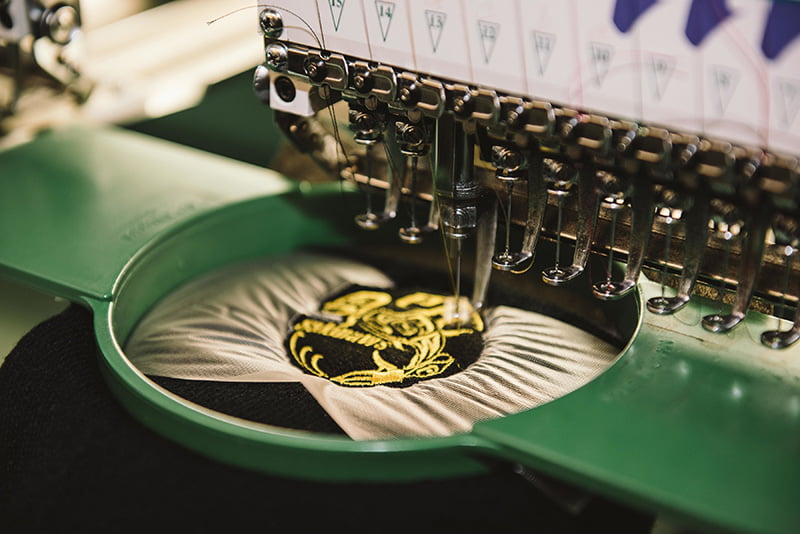
Embroidery gives your logo durability, texture, and a premium finish. At GetBold, our advanced machines and experienced operators ensure crisp stitching, no puckering, and results that last.
Advantages
- Professional look for business logos on polos, jackets, and hats
- Extremely durable — outlasts the garment, won’t fade, crack, or peel
- Scalable for small or large orders, no screen setup needed
- Brand consistency with precise thread colour matching
- Ideal for sturdy fabrics like fleece, canvas, and heavy cotton
- Low-res artwork friendly if the design is clean
- 3D texture that stands out visually and to the touch
- Works over seams and on structured items like caps or bags
- Rich finish with natural thread sheen
Disadvantages
- Limited detail — no fine gradients or subtle shading
- Not fully waterproof; Pantone matches may be approximate
- Size and colour limits; pricing based on stitch count
- Best on heavier fabrics, less suited for lightweight garments
- Higher cost than printing
- Small text (under 5 mm) can be hard to read
Best Uses
Choose embroidery for long-lasting, professional branding on uniforms, outerwear, hats, or accessories — especially when your logo has clean edges and you want a high-quality, tactile finish.
GetBold Is Your Best Source for Creative Embroidery in Vancouver
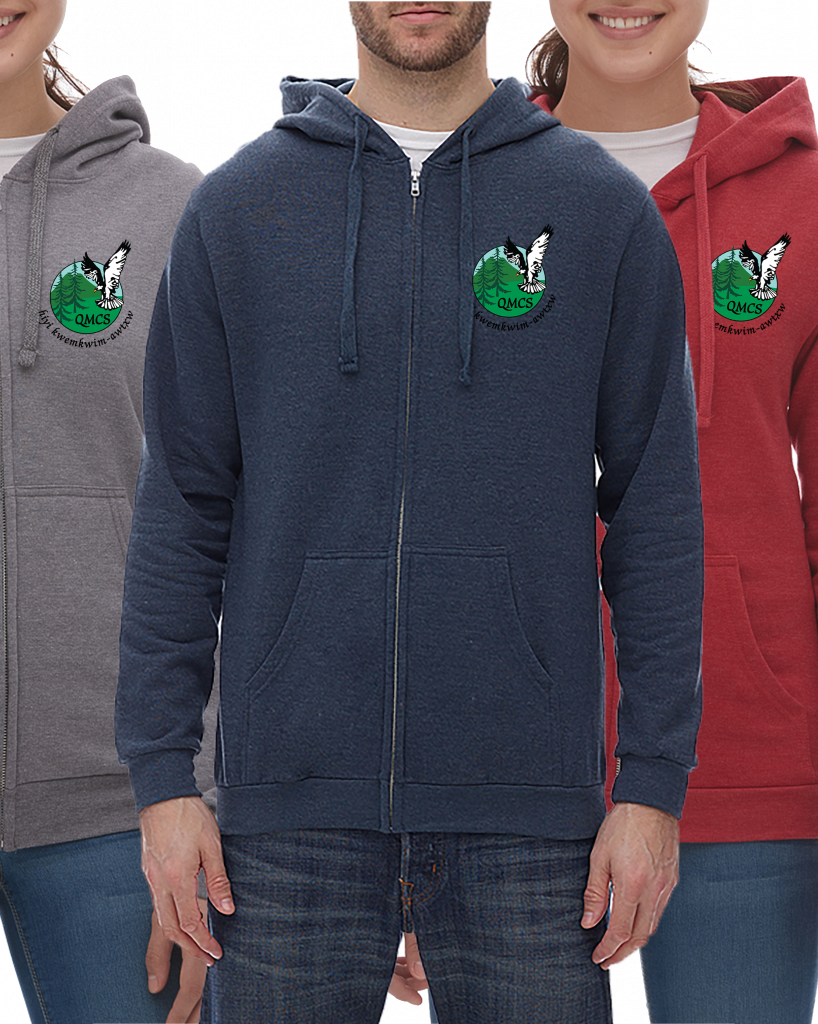
Our embroidery adds durability, dimension, and impact to your logo that can only be achieved with our process.
In our large and specialized embroidery department, we have the best tools to reproduce high-quality logos and other graphics that can be embroidered on a wide range of garments.
We have state-of-the-art Machines and expert operators with the skill and care to do the job right. The result is a first-class image of exceptional quality.
We know that every job is unique, and we know what to look out for—threads don’t pull, and shirts don’t pucker.
Some of our projects are more time-consuming, complex and difficult. Many times, we take on challenges that other shops won’t. We do this because it allows us to demonstrate our skills and maybe because we think that the design is cool! We are up for a good challenge.
Embroidery Has Its Advantages
Professional Appearance
Embroidery instantly adds a polished and established look. It’s commonly used for business logos on polos, jackets, and hats. Nothing looks as sharp and professional as a well-embroidered design.
Long-Lasting and Durable
Because embroidery uses thread stitched directly into the fabric, it won’t fade, crack, or peel over time. An embroidered logo can often outlast the garment itself. It’s ideal for high-use garments like uniforms or workwear.
Effective for Any Order Size
Embroidery is scalable for both small and large runs. There’s no need for screens or ink setup, making it practical even for short orders.
Precise Colour Matching
Thread colours can be specified to match brand guidelines. If not specified, our art team colour-matches as closely as possible to the original artwork.
Works on Durable Fabrics
Embroidery holds up well on sturdy materials like fleece, canvas, and heavy cotton—places where printing may not work as effectively.
Handles Lower-Resolution Artwork
Unlike printing, embroidery doesn’t require high-res artwork. Clean designs can be digitized and stitched even from lower-quality files.
Adds Texture and Dimension
Embroidery creates a 3D effect that adds a tactile and visual element to the garment, making designs stand out.
Over Seams and Structured Surfaces
It’s possible to embroider directly over seams or on structured garments like caps and backpacks, where other decoration methods may struggle.
Vibrant, Rich Finish
Thread has a natural sheen, giving colours a rich, vibrant finish that doesn’t dull over time.
Embroidery Also Has Some Disadvantages
- An embroidering process won’t reproduce certain smaller, more complicated details and subtle variations as well as other methods of reproduction. Needle and thread can only allow for hard-edge artwork. Fading, shading, and gradation are still very limited using embroidery.
- As you can imagine, it can compromise waterproof materials.
- Pantone colour cannot be matched exactly, although we can help advise you on the closest equivalent. There is also a limit to the number of different colours that can be used per design.
- Embroidery embellishments can be no more than 400mm square. Pricing is based on the number of stitches in the design. So, the cost is based on size.
- Some garment fabric can hold embroidered designs better than others.
- It is generally more expensive than other design methods. You pay for the impact of embroidery.
- Also, small text is difficult to reproduce and may not always be readable. 5mm text is the limit, but 8mm text is preferable. Sometimes it might be necessary to make minor adjustments to achieve the best result.
Embroidery vs Printing: Which Is Right for Your Project?
| Feature | Embroidery | Printing (Screen/DTG) |
|---|---|---|
| Appearance | Premium, textured, and professional | Flat, smooth, and vibrant |
| Durability | Extremely long-lasting, won’t fade or peel | Good durability, but may fade or crack over time |
| Detail Capability | Limited fine detail, no gradients | Handles detailed graphics and gradients well |
| Colour Matching | Close thread match (Pantone not exact) | Precise colour matching possible |
| Best Fabrics | Works best on sturdy fabrics (fleece, canvas, polos, jackets) | Works on a wide range of fabrics, including lightweight tees |
| Order Size Flexibility | Cost-effective for small and large runs | Screen printing is best for larger runs; DTG works for small runs |
| Setup Requirements | No screens needed; digitizing required | Screen setup needed for screen printing; none for DTG |
| Cost | Generally more expensive (based on stitch count) | Often more affordable, especially for large orders |
| Applications | Uniforms, hats, outerwear, bags, premium merch | T-shirts, hoodies, promotional wear, complex designs |
When to Choose Embroidery
Choose embroidery when you need:
Durable branding on uniforms or outerwear
Ideal for mechanics’ jackets, restaurant uniforms, or security apparel—items that face daily wear.
A premium look for hats or accessories
Great for real estate brands, golf tournaments, or brewery merch where a polished, structured cap is part of the brand image.
A logo that doesn’t require complex colour gradients
Perfect for tech companies, retail brands, or gyms using solid logos with clean edges.
Garments made of fleece, canvas, or other heavy-duty materials
Works well for fleece zip-ups, work aprons, tote bags, or durable hoodies that need a tough finish.
The Process Is the Product
When deciding whether to print or embroider, there are two main aspects to consider–the source artwork and the fabric. The design should be simpler and have hard-edged blocks of colour instead of subtle details and gradations. Fabrics such as t-shirts may shrink in the wash, but the embroidery won’t. To avoid the image puckering with distortion, make sure you embroider on thicker, heavier fabrics like polo shirts, golf shirts, jackets, hats, and sweaters. Any sturdy fabric can be embroidered. And to keep the cost reasonable and to avoid discomfort, keep the image to a reasonable size. If you start with the end in mind, you have a better chance of success. Watch the video on our home page.
We make it easy for you to order.
FAQ – Embroidery: Pros, Cons, and When to Choose It
What makes embroidery a great choice?
Embroidery offers a professional and refined appearance. It is extremely durable, often outlasting the garment itself, and retains its texture and visual impact over time.
Does embroidery work for both small and large orders?
Yes. Since there’s no special setup like screens required, embroidery is cost-effective regardless of quantity.
Can embroidery match brands accurately?
Yes, thread colors can be customized to match brand standards closely, though they may not be exact Pantone matches.
What fabrics work best with embroidery?
Sturdy materials like fleece, canvas, and heavy cotton are ideal. Embroidery also adapts well to structured items like caps or seams.
Can my low-resolution logo be embroidered?
Yes. If the design is clean and simple, even low-res graphics can be digitized and stitched effectively.
What are the limitations?
Embroidery can’t handle fine details or subtle shading. Color matches may vary slightly, and the process is generally more expensive. Lightweight fabrics and small text are less suitable.
When should I choose embroidery over printing?
Use embroidery when you want durable branding on items like uniforms, hats, or outerwear, prefer a textured finish, and work with bold, clean designs on sturdy fabrics.