What Is Appliqué? A Guide to Tackle Twill and Custom Stitched Apparel
Blog post by GetBold
Published at Tue May 21 2024
Published at Tue May 21 2024
Appliqué vs. Tackle Twill: What’s the Difference?
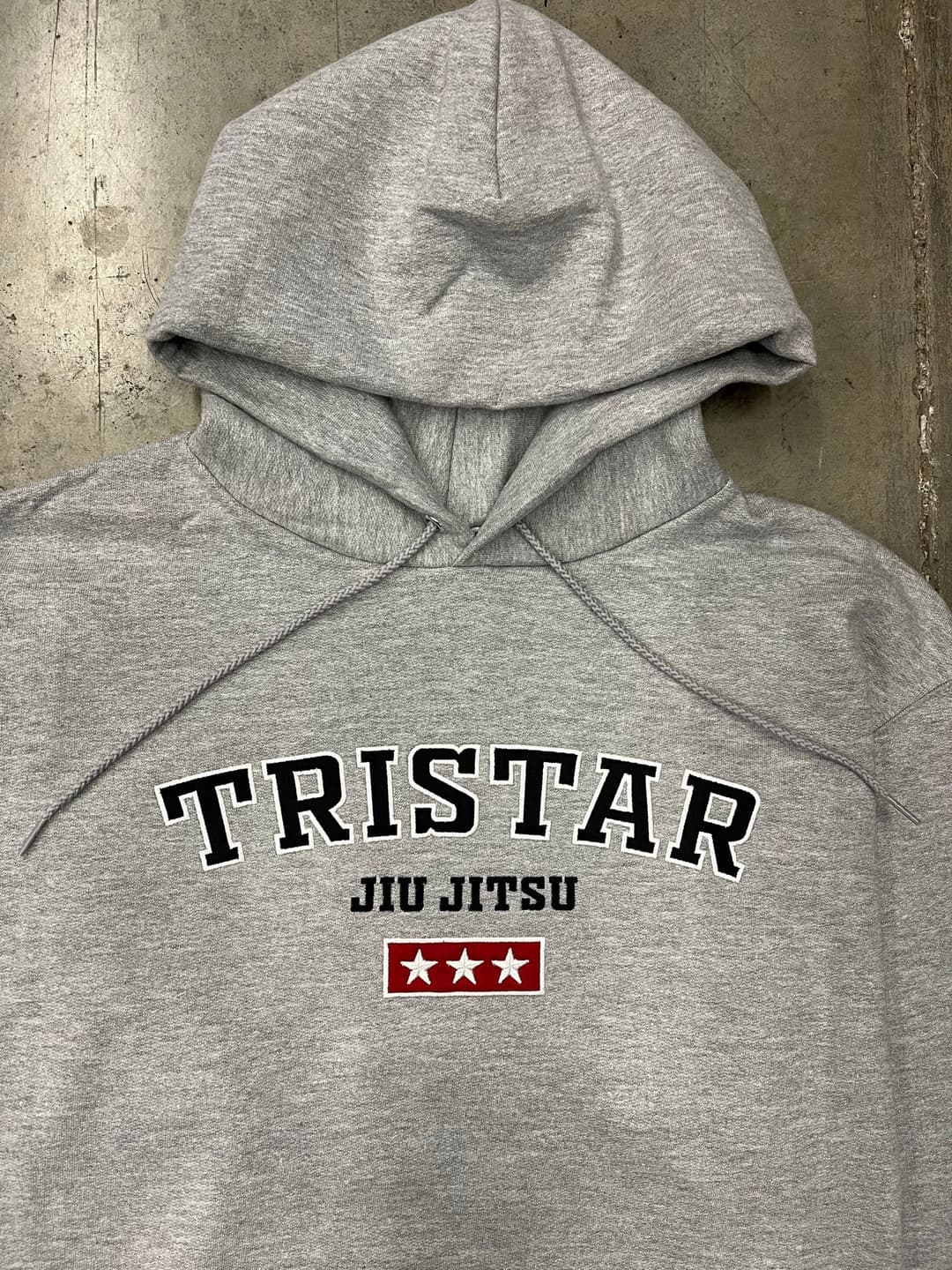
Appliqué is the broader decoration technique, while tackle twill is one of the most popular materials used to create that look. With appliqué, pre-cut pieces of fabric are sewn onto a garment to create a raised, textured design. Tackle twill refers specifically to the structured twill fabric often used for bold letters, numbers, school names, team graphics, and varsity-style apparel.
This is why people often use the terms interchangeably. A college-style hoodie with large stitched letters is technically appliqué, but it is commonly called tackle twill because twill is the fabric being stitched onto the garment. For most custom apparel projects, tackle twill is the best choice when you want a clean, athletic, premium finish that feels more dimensional than screen printing and is more cost-effective than filling a large design entirely with embroidery.
When Should You Choose Tackle Twill for Custom Apparel?
Tackle twill is best suited for bold designs that need to stand out from a distance. It works especially well for large letters, numbers, names, simple logos, team apparel, school spirit wear, grad hoodies, varsity jackets, and lifestyle merch with a collegiate look. Because the design is made from fabric rather than thousands of embroidery stitches, it can create a large, premium-looking decoration without the same stitch count as full embroidery.
This method is not always the best choice for small lettering, fine detail, gradients, or photo-style artwork. For those projects, embroidery, DTF transfers, or screen printing may be a better fit. Tackle twill works best when the design is simple, readable, and intentionally bold. A large school name across the chest, a team number on the back, or a brand wordmark on a heavyweight hoodie are all strong examples.
Best Garments for Appliqué and Tackle Twill
Appliqué and tackle twill usually work best on garments with enough structure to support the raised fabric and stitching. Heavyweight hoodies, crewneck sweatshirts, varsity jackets, team jerseys, fleece, and structured outerwear are all strong choices. These garments give the twill a stable surface, helping the letters or graphics sit cleanly without pulling or bunching.
Lightweight t-shirts can sometimes work for appliqué, but they are not always ideal for large tackle twill designs. The added weight of the twill and stitching may feel too heavy on thinner fabrics, especially if the design covers a large area. For a premium finish, choose apparel that has enough thickness and durability to match the decoration method.
Tackle twill is often chosen when a design needs the raised, stitched look of embroidery but at a larger scale. Standard embroidery is excellent for smaller logos, chest placements, hats, and detailed branding, but it can become expensive and heavy when used for very large designs. Tackle twill solves this by using fabric as the main fill and stitching only around the edges.
Compared with screen printing, tackle twill has more texture and a more premium, dimensional feel. Screen printing is usually better for large quantities, flat graphics, and simpler budget-conscious orders. DTF transfers are better for full-colour artwork, gradients, and fine details. In some cases, tackle twill can also be combined with embroidery or DTF to create a design that has both bold texture and smaller detailed elements.
Tackle Twill
- Best for: Large letters, numbers, varsity designs
- Look and feel: Raised fabric with stitched edges
- Notes: Premium, bold, durable
Embroidery
- Best for: Small logos, hats, polos, chest designs
- Look and feel: Thread-based, textured
- Notes: Can get costly for large design
Screen Printing
- Best for: Bulk apparel, flat graphics
- Look and feel: Smooth, printed finish
- Notes: Great for high-volume orders
DTF Transfers
- Best for: Full-colour or detailed designs
- Look and feel: Smooth transfer finish
- Notes: Better for gradients and small details
How Stitch Type Changes the Look and Cost
The stitch style used around the appliqué changes both the final appearance and the production cost. A satin stitch gives the cleanest and most polished edge because the thread fully covers the border of the twill. This creates a premium finish, but it also increases the stitch count and can raise the price.
A zigzag stitch is a more athletic and cost-effective option. It secures the twill with fewer stitches and leaves more of the fabric edge visible, which creates the classic teamwear or varsity look. A combination stitch can also be used when certain parts of the design need a cleaner finish while other areas can remain more casual or budget-friendly.
How Pricing Works for Appliqué and Tackle Twill
Appliqué pricing depends on the size of the design, the number of fabric layers, the stitch type, and the overall complexity of the artwork. A simple one-colour wordmark with zigzag stitching will usually be more budget-friendly than a multi-layer design with satin stitching around every edge.
Larger designs also require more material, more cutting time, and more stitching. This is why tackle twill is often a smart choice for bold chest designs or large back designs, but it still needs to be quoted based on the actual artwork. Customers should also consider whether they want a single-layer design, two-colour stacked lettering, embroidery details, or a mixed decoration method such as twill plus DTF.
How to Prepare Artwork for Appliqué
For the best appliqué result, artwork should be bold, clean, and easy to separate into fabric shapes. Large block letters, simple icons, numbers, mascots, and clean wordmarks usually work better than thin scripts, small text, distressed textures, or highly detailed illustrations.
When preparing a design, avoid tiny gaps, narrow strokes, and small elements that may be difficult to cut or stitch cleanly. If the design includes multiple colours, each colour may need to be treated as a separate fabric layer or decoration element. Customers do not need to know every technical detail before ordering, but starting with a clean, simplified design helps the final garment look sharper and more professional.
Before placing an order, review GetBold’s artwork guidelines to make sure your appliqué design is simple, readable, and production-ready.
How to Care for Appliqué Clothing
To keep appliqué and tackle twill looking its best, wash the garment inside out using cold water and a gentle cycle. Avoid high heat when drying, as excessive heat can affect the garment, stitching, adhesive backing, or fabric layers over time. Air drying or tumble drying on low is usually the safest option.
Do not iron directly over the twill or stitched edges. If ironing is needed, turn the garment inside out or use a protective cloth between the iron and the design. Proper care helps preserve the raised look, keeps the edges secure, and protects the garment from unnecessary wear.
Frequently Asked Questions About Appliqué and Tackle Twill
Is tackle twill the same as appliqué?
Tackle twill is a type of appliqué. Appliqué is the technique of stitching fabric onto a garment, while tackle twill refers to the structured twill fabric commonly used for varsity letters, numbers, and team apparel.
Is tackle twill better than embroidery?
Tackle twill is often better for large designs because it uses fabric as the main fill instead of dense embroidery stitches. Embroidery is usually better for smaller logos, hats, polos, and detailed branding.
What is tackle twill best used for?
Tackle twill is best for bold lettering, numbers, school apparel, team jerseys, varsity hoodies, grad wear, and large custom designs that need a raised, premium look.
Can tackle twill be used on t-shirts?
It can be used on some t-shirts, but heavier garments like hoodies, crewnecks, jackets, and jerseys usually provide a better surface for large tackle twill designs.
Can appliqué be combined with embroidery?
Yes. Appliqué is often combined with embroidery to add smaller details, outlines, icons, or text around larger fabric letters or graphics.
Can appliqué be combined with printing?
Yes, but the method matters. DTF transfers are often easier to combine with tackle twill when detailed artwork or more precise placement is needed. Screen printing can work in some cases, but exact alignment may be more difficult.